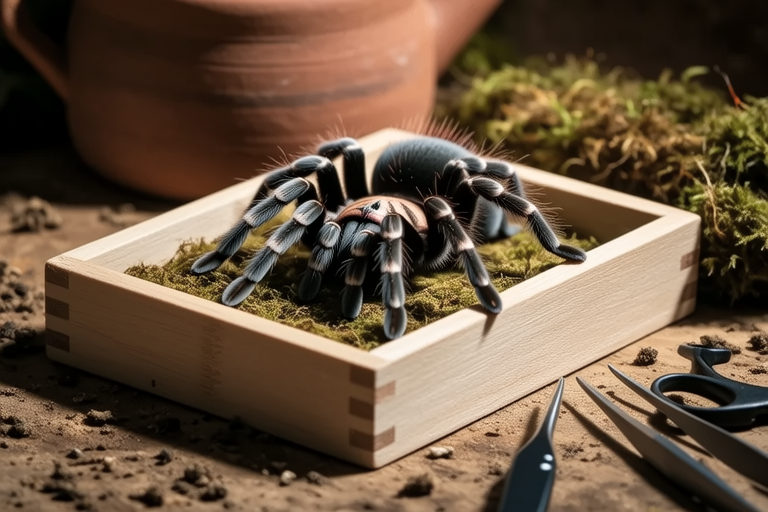
Caring for Tarantulas: A Comprehensive Guide
Keeping tarantulas as pets can be a rewarding experience for enthusiasts of all levels. These fascinating creatures require specific care to ensure their well-being. This guide will walk you through setting up the ideal habitat, providing the appropriate diet, handling your tarantula safely, recognizing signs of good health, and maintaining a clean environment.
Setting Up the Ideal Habitat
The first step in caring for your tarantula is creating a suitable habitat that mimics its natural environment. Choose an appropriately sized tank with a secure lid; a 10-gallon tank is sufficient for most species. The substrate should be at least three inches deep to allow burrowing. Use coconut fiber or bark chips, which retain moisture well and are easy to clean.
Provide hiding spots such as cork bark or half logs. Tarantulas need darkness to feel secure, so minimal lighting is recommended. Maintain a temperature between 75-85°F (24-29°C) and humidity around 60-80%. A shallow water dish will help maintain humidity levels.
Appropriate Diet and Feeding Schedules
Tarantulas are carnivorous and feed on live insects. Crickets, mealworms, and dubia roaches are popular choices. Feed juveniles every few days, while adults can be fed once a week. Adjust the frequency based on your tarantula’s appetite and activity level.
Ensure prey items are no larger than half the size of the tarantula’s body to prevent injury. Dust feeder insects with calcium and vitamin supplements before offering them to your pet. Remove uneaten prey after 24 hours to avoid attracting pests.
Handling and Safety Tips
Handle your tarantula gently and infrequently to reduce stress. Always support the abdomen and legs when picking it up. Use a long-handled net or paper cup to scoop it out of the enclosure.
Wear gloves if necessary but avoid pinching or squeezing the tarantula. If bitten, wash the area with soap and water and seek medical attention if swelling occurs. Tarantulas may also flick urticating hairs from their abdomens when threatened, causing irritation to eyes and skin.
Health Indicators and Common Illnesses
Healthy tarantulas have clear eyes, plump abdomens, and regular movement. Signs of poor health include lethargy, loss of appetite, bloated abdomens, or difficulty moving. Common illnesses include mites, fungal infections, and dehydration.
Mites can be identified by tiny red specks on the tarantula’s body. Fungal infections cause white patches on the carapace. Dehydrated tarantulas have wrinkled abdomens. Consult a veterinarian specializing in exotic animals for diagnosis and treatment.
Tips for Maintaining a Clean Environment
Regular cleaning helps maintain optimal conditions for your tarantula. Spot-clean daily by removing uneaten prey and waste. Deep clean the enclosure monthly by replacing the substrate and disinfecting non-substrate items with a reptile-safe cleaner.
Ensure the enclosure dries completely before reintroducing your pet. Avoid using harsh chemicals that could harm your tarantula. Regular cleaning prevents the buildup of bacteria and parasites.
Understanding Tarantula Behavior
Observing your tarantula’s behavior provides valuable insights into its health and happiness. Tarantulas are nocturnal, so they’re most active at night. They molt periodically, shedding their exoskeleton to grow. During this time, provide extra moisture and avoid disturbing them.
Respect your tarantula’s need for solitude. Tarantulas are solitary creatures and prefer minimal interaction. Provide a quiet environment free from loud noises or vibrations. Understanding these behaviors ensures your tarantula remains stress-free.
Conclusion
Caring for tarantulas involves creating a suitable habitat, providing proper nutrition, handling them carefully, monitoring their health, and maintaining cleanliness. By following these guidelines, you’ll ensure your tarantula leads a happy, healthy life. Remember, patience and respect are key when interacting with these fascinating arachnids.
