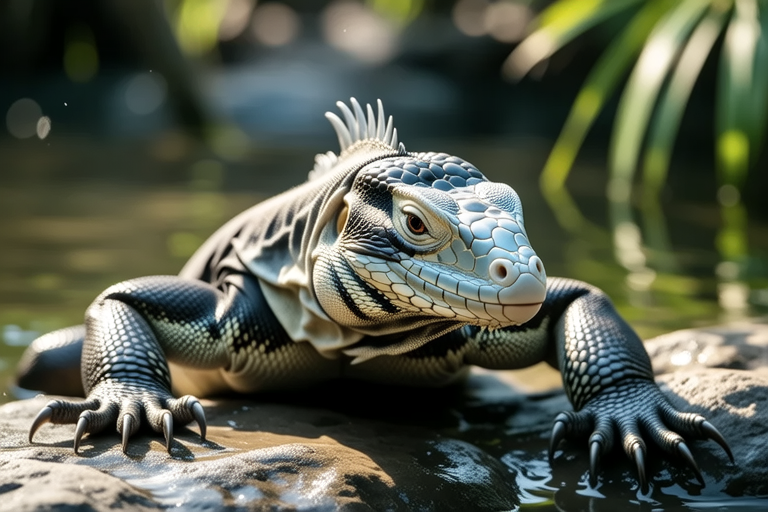
The Fascinating World of Water Monitors
Water monitors (Varanus salvator) are among the most impressive reptiles on Earth, renowned for their remarkable adaptability and striking presence. These aquatic giants have evolved over millennia to thrive in diverse environments, from lush rainforests to sprawling wetlands. This article delves into the captivating life and habits of water monitors, focusing on their adaptations to aquatic environments, unique behaviors, dietary preferences, and conservation status. We’ll also explore their role in aquatic ecosystems and the threats they face, as well as insights into human interactions and responsible wildlife observation.
Physical Characteristics: Distinguishing Features of Aquatic Giants
Water monitors are easily recognizable by their sleek, elongated bodies, which can grow up to 3 meters in length. Their powerful limbs and long tails enable efficient movement both on land and in water. The tail is particularly noteworthy, acting as a rudder while swimming and as a weapon during confrontations. Their skin is covered in small scales that provide excellent protection against predators and harsh environmental conditions. Another distinctive feature is their forked tongue, used for detecting chemical signals in the air, aiding in prey location and navigation.
Adaptation to Aquatic Environments
Water monitors have developed several adaptations that allow them to excel in aquatic settings. Their nostrils are positioned high on their snouts, enabling them to breathe while partially submerged. Additionally, they possess a valve-like structure that seals off their windpipe when diving, preventing water from entering. These features make them adept swimmers, capable of holding their breath for extended periods. Their eyes are also adapted for underwater vision, featuring a transparent third eyelid that protects them while swimming.
Unique Behaviors and Dietary Preferences
Water monitors exhibit fascinating behaviors that reflect their complex social structures and hunting strategies. They are primarily diurnal, meaning they are most active during the day. In the wild, they spend considerable time basking in the sun to regulate their body temperature, an essential process known as thermoregulation. When hunting, they employ a combination of stealth and speed, often ambushing unsuspecting prey. Their diet is varied, comprising insects, fish, crustaceans, amphibians, birds, eggs, and even small mammals. Larger individuals may tackle larger prey, such as monitor lizards, snakes, and young crocodiles.
Role in Aquatic Ecosystems
Water monitors play a crucial role in maintaining the balance of aquatic ecosystems. As apex predators, they control populations of smaller animals, preventing overpopulation and ensuring biodiversity. By consuming carrion, they also help recycle nutrients within the ecosystem. Their burrowing activities contribute to soil aeration and the creation of habitats for other species. Moreover, their presence serves as an indicator of ecosystem health; declining populations may signal environmental degradation.
Conservation Status and Threats
Despite their resilience, water monitors face numerous threats, including habitat destruction, illegal poaching, and pollution. Habitat loss due to deforestation and urbanization poses a significant risk, as it reduces available nesting sites and disrupts food chains. Poaching for the pet trade and traditional medicine markets further exacerbates population declines. Pollution, particularly from agricultural runoff and industrial waste, contaminates water sources and harms aquatic life, indirectly affecting water monitors.
Human Interactions and Responsible Wildlife Observation
Water monitors have a long history of interaction with humans, often viewed with both fascination and fear. In some cultures, they are revered as symbols of strength and resilience, while others perceive them as pests or dangerous predators. It’s important to approach these magnificent creatures with respect and caution. If you encounter a water monitor in the wild, maintain a safe distance and avoid disturbing its natural behavior. For those interested in keeping water monitors as pets, it’s crucial to understand the responsibilities involved. Providing adequate space, appropriate diet, and proper care requires significant commitment and knowledge.
Tips for Responsible Wildlife Observation
- Respect Wildlife Boundaries: Always observe water monitors from a safe distance to avoid stressing them or putting yourself at risk.
- Educate Yourself: Learn about the local regulations and guidelines for observing wildlife to ensure compliance and promote ethical practices.
- Support Conservation Efforts: Contribute to organizations dedicated to protecting water monitors and their habitats through donations or volunteer work.
- Avoid Disturbance: Refrain from feeding or handling water monitors, as this can alter their natural behavior and increase dependency on humans.
- Report Illegal Activities: If you witness poaching or other illegal activities, report them to the authorities to help protect water monitor populations.
Conclusion
Water monitors are truly remarkable creatures, showcasing the wonders of nature through their adaptability, unique behaviors, and vital roles in aquatic ecosystems. By understanding and respecting these magnificent reptiles, we can contribute to their conservation and ensure their continued survival for future generations. Whether you’re captivated by their striking appearance or intrigued by their complex behaviors, water monitors offer endless fascination and inspiration. Let us work together to protect these aquatic giants and preserve the delicate balance of our planet’s ecosystems.
