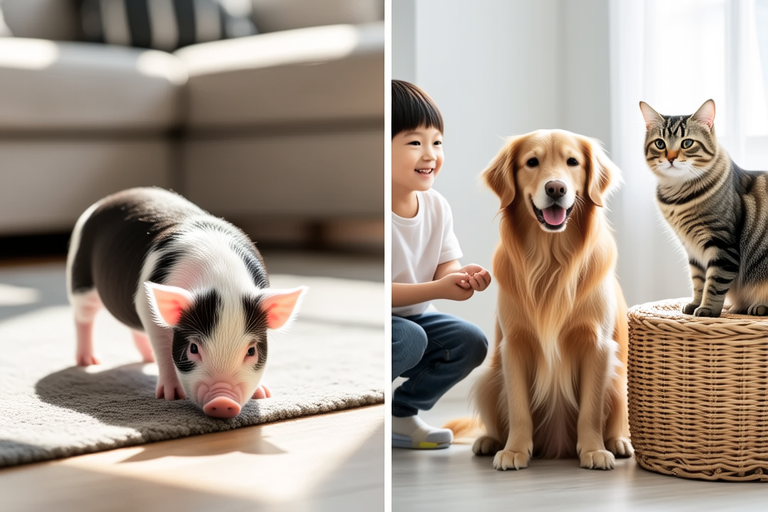
Mini Pigs, Cats, and Dogs: A Comprehensive Comparison
Choosing the right pet can be a daunting task, especially when you’re torn between mini pigs, cats, and dogs. Each of these animals has unique characteristics, care requirements, space needs, and compatibility with family life. This article aims to provide a detailed comparison to help you make an informed decision about adopting a pet.
Unique Characteristics of Mini Pigs, Cats, and Dogs
Mini Pigs
Mini pigs, also known as teacup or micro pigs, have become increasingly popular as pets. They are intelligent, curious, and social creatures that can form strong bonds with their owners. Unlike full-sized pigs, mini pigs are smaller and more manageable, typically weighing between 50 to 150 pounds. Despite their size, they still require a lot of space and attention.
Cats
Cats are independent, self-sufficient, and generally low-maintenance pets. They are known for their cleanliness, as they groom themselves regularly. Cats are also excellent hunters and can entertain themselves for long periods. They are territorial and may not get along well with other pets or children if not properly introduced.
Dogs
Dogs are loyal, affectionate, and social animals that thrive on human interaction. They come in various breeds, sizes, and temperaments, making them suitable for different living situations. Dogs are pack animals and often see their owners as part of their pack. They require regular exercise and mental stimulation to stay healthy and happy.
Care Requirements
Mini Pigs
Mini pigs require a balanced diet consisting of high-quality pig feed, fruits, vegetables, and occasional treats. They need access to fresh water at all times. Mini pigs also need regular grooming, including nail trimming, ear cleaning, and teeth brushing. They are prone to obesity, so it’s essential to monitor their food intake and provide opportunities for physical activity.
Cats
Cats are relatively easy to care for compared to other pets. They require a litter box, scratching post, and toys. Cats should be fed a balanced diet of wet and dry food, and they need access to fresh water. Regular grooming is necessary to keep their coat healthy and reduce shedding. Cats also need regular veterinary check-ups and vaccinations.
Dogs
Dogs require a balanced diet, regular exercise, and mental stimulation. They need to be walked several times a day and provided with opportunities for play and socialization. Dogs also need regular grooming, depending on their breed. They should be vaccinated and checked by a veterinarian regularly.
Space Needs
Mini Pigs
Mini pigs require a large outdoor area with shelter from the elements. They need a secure enclosure to prevent escape and protect them from predators. Indoor space is also necessary for feeding, sleeping, and bonding. Mini pigs are messy animals and require frequent cleaning of their living areas.
Cats
Cats are adaptable and can live comfortably in small spaces as long as they have access to a litter box, scratching post, and toys. They also need a quiet, comfortable place to rest and sleep. Cats can be indoor or outdoor pets, but indoor cats are generally safer and healthier.
Dogs
Dogs require varying amounts of space, depending on their size and activity level. Larger dogs and more active breeds need more space for running and playing. Smaller dogs and less active breeds can be content in smaller spaces. Dogs should have access to a yard or park for exercise and playtime.
Compatibility with Family Life
Mini Pigs
Mini pigs can be great companions for families, but they require a significant time commitment. They are intelligent and social animals that enjoy being around people. However, they can be destructive if left alone for too long. Mini pigs also need proper training and socialization to ensure they behave appropriately around children and other pets.
Cats
Cats are independent and can adapt to different family dynamics. They are generally good with children and other pets if introduced properly. Cats are nocturnal and may be more active during the night, which can be disruptive for some families. Cats also require regular attention and playtime to stay mentally stimulated.
Dogs
Dogs are loyal and affectionate pets that thrive on human interaction. They can be great companions for families, especially those with children. Dogs require regular exercise and mental stimulation, which can be a challenge for busy families. Proper training and socialization are essential to ensure dogs behave appropriately around children and other pets.
Pros and Cons of Each Pet
Mini Pigs
Pros
- Intelligent and social
- Can form strong bonds with their owners
- Low maintenance grooming
Cons
- Require a lot of space and attention
- Prone to obesity
- Can be destructive if left alone for too long
Cats
Pros
- Independent and self-sufficient
- Generally low-maintenance
- Excellent hunters
Cons
- Territorial and may not get along with other pets or children
- Nocturnal and may be disruptive during the night
- May require regular grooming
Dogs
Pros
- Loyal and affectionate
- Thrives on human interaction
- Versatile and adaptable
Cons
- Require regular exercise and mental stimulation
- May be challenging to train and socialize
- Costly in terms of food, toys, and veterinary care
Commitment Level Required
Mini Pigs
Raising a mini pig requires a significant time commitment. They need regular feeding, grooming, and socialization. Mini pigs also require a lot of space and attention, making them unsuitable for busy families or those who work long hours. Mini pigs can live up to 15 years, so adopting one is a long-term commitment.
Cats
Caring for a cat requires less time and effort than a dog or mini pig. Cats are generally low-maintenance and can entertain themselves for long periods. However, cats still require regular feeding, grooming, and attention. Cats can live up to 20 years, so adopting one is also a long-term commitment.
Dogs
Dogs require a significant time commitment, especially for larger breeds and more active ones. They need regular exercise, mental stimulation, and socialization. Dogs also require proper training and socialization to ensure they behave appropriately around children and other pets. Dogs can live up to 15 years, so adopting one is a long-term commitment.
Pets Suited for Different Living Situations and Family Dynamics
Mini Pigs
Mini pigs are best suited for families with ample space and time to dedicate to their care. They are not recommended for apartment dwellers or those who work long hours. Mini pigs are also not recommended for families with young children or other pets, as they can be destructive and territorial.
Cats
Cats are adaptable and can thrive in various living situations. They are ideal for families with limited space or those who work long hours. Cats are also great for families with young children or other pets, as they are independent and can adapt to different family dynamics.
Dogs
Dogs are versatile and can adapt to different living situations, depending on their size and activity level. Larger dogs and more active breeds are better suited for families with ample space and time to dedicate to their care. Smaller dogs and less active breeds can be content in smaller spaces. Dogs are great for families with young children or other pets, as they are loyal and affectionate.
Conclusion
Choosing the right pet depends on your lifestyle, living situation, and family dynamics. Mini pigs, cats, and dogs each have unique characteristics, care requirements, space needs, and compatibility with family life. It’s essential to consider the pros and cons of each pet regarding health, behavior, training, and cost. Adopting a pet is a long-term commitment, so it’s crucial to choose a pet that fits your lifestyle and can thrive in your home.
