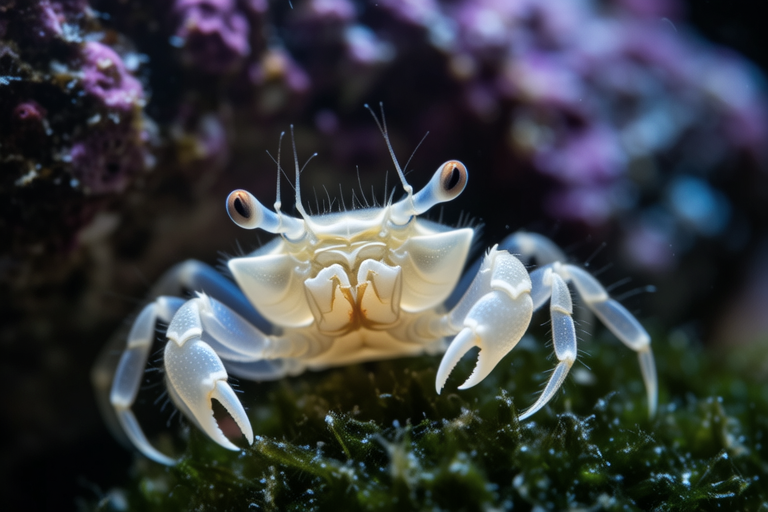
The Pea Crab: A Tiny Marvel of the Ocean
The pea crab, also known scientifically as Pinnotheres, is one of the smallest crabs in the world. Despite its diminutive size, this fascinating creature has adapted remarkably well to its environment, showcasing unique behaviors and survival strategies that have captivated scientists and marine enthusiasts alike.
Physical Characteristics
Pea crabs are named for their resemblance to a large pea, typically measuring just a few millimeters in length. They possess a flattened body covered in fine hairs, which helps them blend into their surroundings. Their coloration can vary from pale yellow to dark brown, depending on the species and their habitat. The claws of pea crabs are relatively small but strong enough to hold onto their hosts tightly. These crabs have five pairs of legs, with the first pair modified into pincers used for grasping and manipulating food.
Habitat and Distribution
Pea crabs inhabit shallow coastal waters worldwide, including bays, estuaries, and lagoons. They prefer environments rich in organic matter, where they can find ample food sources and potential hosts. Some species are even found in freshwater habitats, such as rivers and lakes, adapting to various salinity levels. Their geographical distribution spans across the globe, from the temperate regions of North America and Europe to the tropical waters of Asia and Australia.
Diet and Feeding Habits
Pea crabs are opportunistic feeders, primarily consuming plankton, detritus, and microorganisms found in the water column. However, their most significant source of nutrition comes from their symbiotic relationships with other marine organisms. By living within the mantle cavity of their host, usually sea anemones or barnacles, they gain access to a constant supply of nutrients through the host’s filter feeding mechanism. This arrangement allows the pea crab to thrive without expending much energy searching for food.
Symbiotic Relationships
The pea crab’s most notable adaptation is its ability to form mutually beneficial relationships with other marine creatures. One of the most common hosts for pea crabs is the sea anemone. The crab takes refuge inside the anemone’s protective tentacles, where it is safe from predators and provided with a steady supply of food particles trapped by the anemone’s stinging cells. In return, the pea crab helps clean the anemone by consuming parasites and debris that could otherwise harm its host.
Barnacles serve as another important host for pea crabs. These crustaceans live inside the barnacle’s shell, where they benefit from protection and a reliable food source. The barnacle filters plankton from the surrounding water, which the pea crab can easily consume. Additionally, the presence of the pea crab may deter some predators from attacking the barnacle, as the crab’s sharp claws can deliver painful bites.
Unique Behaviors and Adaptations
Due to their small size, pea crabs have developed several unique behaviors and adaptations to survive in their challenging environment. For instance, they possess highly sensitive antennae that help them detect changes in water currents and locate potential hosts. Their flattened bodies allow them to squeeze into tight spaces, making it easier to hide from predators and establish themselves within the mantle cavities of their hosts.
Pea crabs are also known for their reproductive strategies. Female pea crabs carry their eggs under their bodies until they hatch, providing protection and nourishment for the developing embryos. Once the larvae emerge, they disperse into the water column, where they must quickly find a suitable host to continue their development. This method ensures a higher survival rate for the offspring, as many larvae would likely be eaten if left unprotected.
Classification and Scientific Facts
Pea crabs belong to the family Pinnotheridae, which includes approximately 60 species distributed across different genera. They are part of the superfamily Pinnotheroidea, a group of small crabs characterized by their flattened bodies and symbiotic relationships with other marine organisms. Pea crabs are classified within the order Brachyura, which encompasses all true crabs, and the class Malacostraca, a diverse group of crustaceans that includes shrimp, lobsters, and crayfish.
Scientists have been studying pea crabs for decades, fascinated by their unique adaptations and ecological roles. Research has revealed that these tiny crabs play an essential role in maintaining the balance of their ecosystems. By controlling populations of parasites and debris, they contribute to the overall health of their hosts and the broader marine environment.
The Importance of Preserving Their Ecosystem
As with all marine species, the preservation of pea crabs and their habitats is crucial for maintaining biodiversity and ensuring the health of our oceans. Human activities such as pollution, overfishing, and habitat destruction threaten the delicate balance of marine ecosystems, putting pressure on species like the pea crab. Protecting their environment not only safeguards these tiny creatures but also benefits the entire marine food web.
Efforts to conserve marine ecosystems include establishing protected areas, promoting sustainable fishing practices, and reducing pollution. By supporting conservation initiatives and raising awareness about the importance of marine biodiversity, we can help ensure the survival of pea crabs and other valuable species for future generations to appreciate and study.
